by Association for Software Testing | Syndicated
Tuesday, December 6 dawned cold. No, really cold. I’m from Michigan, this was cold. Snowing and still bright. Good thing I’m inside.The morning started with a lean coffee session hosted by Lisa Crispin and Janet Gregory. There was a good turnout and re…
by Association for Software Testing | Syndicated
December 5, 2016 dawned cold, a little foggy after very heavy fog day night before, and with a beautiful hoarfrost coating the trees. I had a very long travel day yesterday which resulted in me showing up nearly 2 hours late to the conference center an…
by Association for Software Testing | Syndicated
Many, many years ago I went to college and graduated as a teacher. I was going to say “became a teacher” but that would be wrong. College gives you a level of preparation to become a teacher but you don’t actually become one until you spend time in the classroom developing the requisite skills and … Continue reading Building Bridges
by Association for Software Testing | Syndicated
Once you start to have a larger number of tests it can be important to be able to break them down into different categories or groupings. From a functionality perspective this allows you to only run a subset of tests. They can also help to provide clarity or insight to your test code, by replacing … [Read more…]
by Association for Software Testing | Syndicated
A few weeks ago I put out an appeal for resources for testers who are pulled into live support situations:
Looking for blogs, books, videos or other advice for testers pulled into real-time customer support, e.g. helping diagnose issues
#testing— James Thomas (@qahiccupps) October 28, 2016
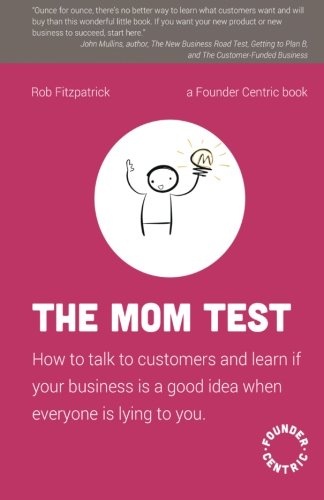
One suggestion I received was The Mom Test by Rob Fitzpatrick, a book intended to help entrepreneurs or sales folk to efficiently validate ideas by engagement with an appropriate target market segment. And perhaps that doesn’t sound directly relevant to testers?
But it’s front-loaded with advice for framing information-gathering questions in a way which attempts not to bias the the answers (“This book is specifically about how to properly talk to customers and learn from them”). And that might be, right?
The conceit of the name, I’m pleased to say, is not that mums are stupid and have to be talked down to. Rather, the insight is that “Your mom will lie to you the most (just ‘cuz she loves you)” but, in fact, if you frame your questions the wrong way, pretty much anyone will lie to you and the result of your conversation will be non-data, non-committal, and non-actionable. So, if you can find ways to ask your mum questions that she finds it easy to be truthful about, the same techniques should work with others.
The content is readable, and seems reasonable, and feels like real life informed it. The advice is – hurrah! – not in the form of some arbitrary number of magic steps to enlightenment, but examples, summarised as rules of thumb. Here’s a few of the latter that I found relevant to customer support engagements, with a bit of commentary:
- Opinions are worthless … go for data instead
- You’re shooting blind until you understand their goals … or their idea of what the problem is
- Watching someone do a task will show you where the problems and inefficiencies really are, not where the customer thinks they are … again, understand the real problem, gather real data
- People want to help you. Give them an excuse to do so … offer opportunities for the customer to talk; and then listen to them
- The more you’re talking, the worse you’re doing … again, listen
These are useful, general, heuristics for talking to anyone about a problem and can be applied with internal stakeholders at your leisure as well as with customers when the clock is ticking. (But simply remembering
Weinberg’s definition of a problem and the Relative Rule has served me well, too.)
Given the nature of the book, you’ll need to pick out the advice that’s relevant to you – hiding your ideas so as not to seem like you’re needily asking for validation is less often useful to a tester, in my experience – but as someone who hasn’t been much involved in sales engagements I found the rest interesting background too.


Recent Comments